Vermivora chrysoptera x VERMIVORA cyanoptera
Status: Rare casual spring and fall migrant east.
Documentation: “Brewster’s Warbler”: photograph, 18 May 2020 Madison Co (Brogie, in gallery).
Taxonomy: This species and Blue-winged Warbler V. cyanoptera hybridize frequently and produce fertile hybrids and introgressants; their genomes are 99.97% identical, with plumage genes accounting for the difference (Toews et al 2016). Traditionally, the occurrence of plain-throated, mostly yellow hybrids (“Brewster’s Warbler”) and black-throated, mostly pale hybrids (“Lawrence’s Warbler”) was thought to be determined in a Mendelian (Nichols 1908) or modified Mendelian (Parkes 1951) manner, as summarized by Confer et al (2020). A Mendelian process would predict the more common occurrence of Brewster’s rather than Lawrence’s Warbler.
More recently, a study of the genomic and phenotypic variation in the hybrid complex (Baiz et al 2020) found no genetic basis for the observed phenotypes but instead found that the variations in plumage resulted from differing degrees of expression among the backcross mix of Blue-winged Warbler genes, primarily those resulting in yellow plumage and plain throat. Appearance of the black throat, traditionally associated with “Lawrence’s Warbler”), was controlled by a gene recessive to that controlling the plain throat coloration of “Brewster’s Warbler”. Thus, the variation in backcrosses, rather than being a Mendelian-controlled process, appears to be the expression of a range of genomic combinations, with black-throat a recessive feature.
See Comments for discussion of potential introgressants among Nebraska records.
Genetic studies indicate introgression of cyanoptera (Blue-winged) haplotypes into chrysoptera (Golden-winged) phenotypes with no reverse movement (Confer et al 2020), indicating that chrysoptera is being replaced by cyanoptera (Confer et al 2020). The only known remaining phenotypically and genetically pure populations of chrysoptera breed in Manitoba, where numbers are actually increasing (Confer et al 2020), possibly explaining increasing numbers being reported in Nebraska in the last few years.
Rather startling was a hybrid between a male Chestnut-sided Warbler and a Brewster’s Warbler found in Pennsylvania 7 May 2018, known as the “Burket Triple Hybrid”; it sang a Chestnut-sided Warbler song, as expected since DNA determined the genetic makeup and found that the male parent was a Chestnut-sided (Grove 2019).
Records: There are six Nebraska records of Brewster’s Warbler, four in spring and two in fall. The spring records are rather late in the migration window; hybrids often follow different migration routes and timing than their parent species.
18 May 2020 Madison Co (Mark Brogie, personal communication, photo eBird.org)
19 May 1982 Keya Paha Co (Brogie and Mossman 1983)
21 May 2020 Sarpy Co (Phil Swanson, photo in gallery)
22 May 2022 Sarpy Co (Phil Swanson, personal communication, photographs)
6 Sep 2007 Fontenelle Forest, Sarpy Co
13 Sep 2008 Oak Grove WMA, Seward Co.
Comments: These comments should be read with the taxonomic discussion above arising from studies by Baiz et al 2020) in mind.
Lawrence’s Warbler is extremely rare on the Great Plains, with perhaps three records, Jun and Oct in North Dakota and May in northwestern Missouri (eBird.org, accessed May 2025). An individual photographed by Phil Swanson 25 May 2021 (see bottom two photos herein) exhibited a facial pattern reminiscent of Golden-winged Warbler but without black markings and with underparts mottled in gray and yellow; although it was initially thought to be a Lawrence’s, experts have indicated it is a backcross between an F1 hybrid (Brewster’s) and an F2 introgressant (Tom Stephenson, personal communication) or a “lightly introgressed Golden-winged female, since it lacks a fully yellow nape, breast, belly” required for Lawrence’s (John McKay). McKay makes the further point that “mixed genetics Golden-winged are not the same as Lawrence’s”.
It should be added that the photographs herein by Mark Brogie (top two) of a Brewster’s Warbler do show some upper breast markings suggestive of introgression rather than what might be expected of a “pure” F1 hybrid.
Hover mouse over photos below for captions.
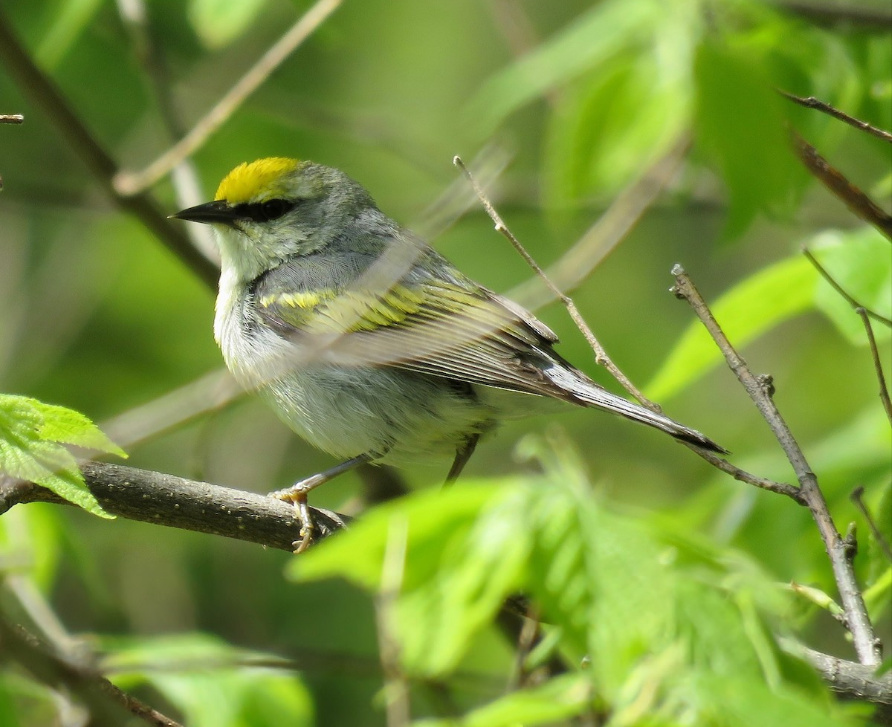
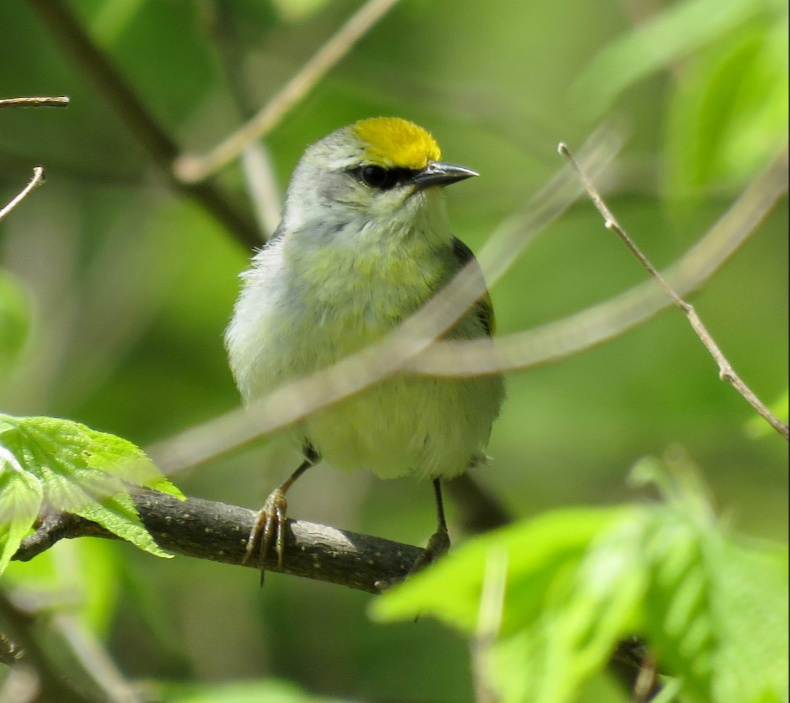
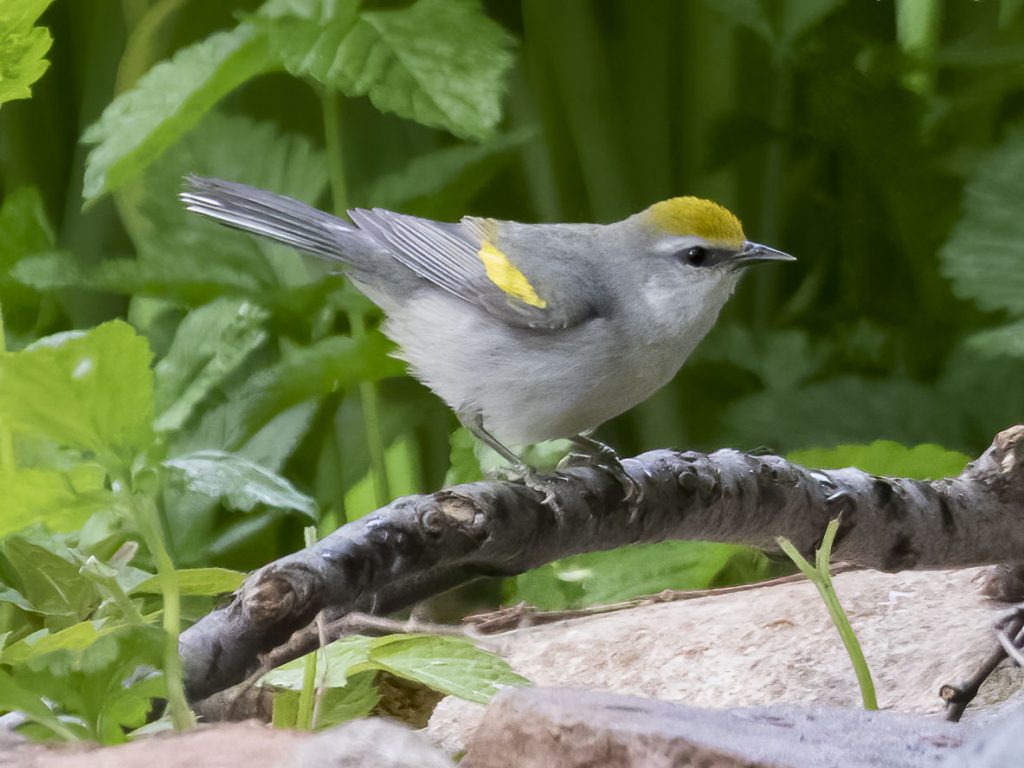
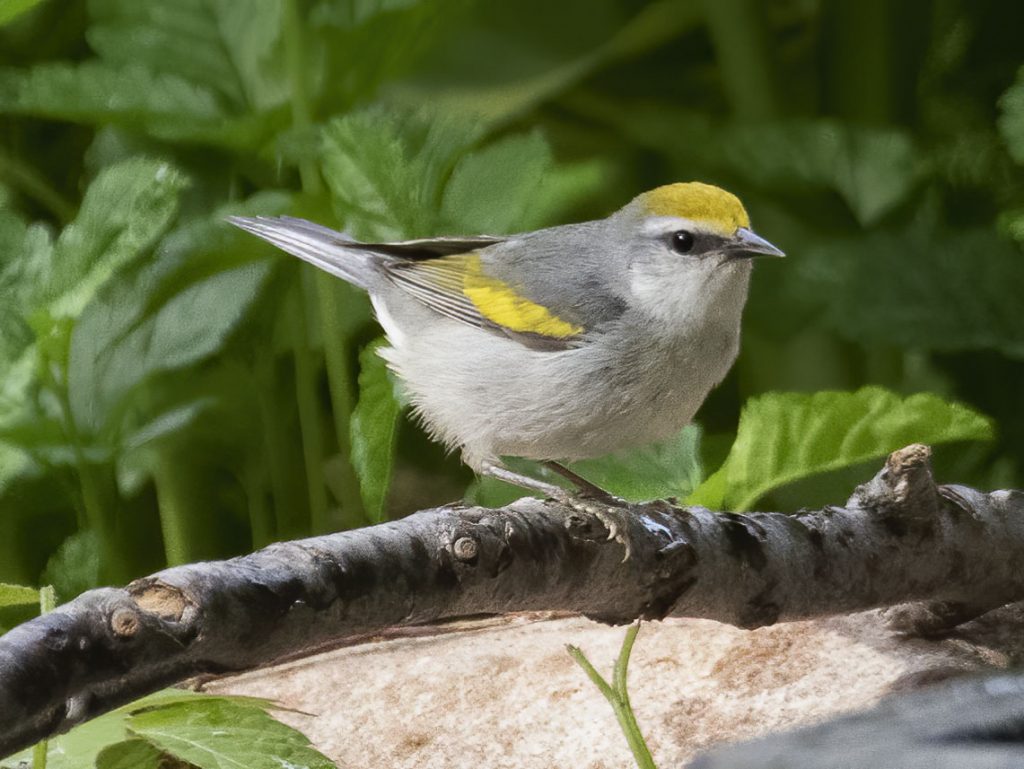
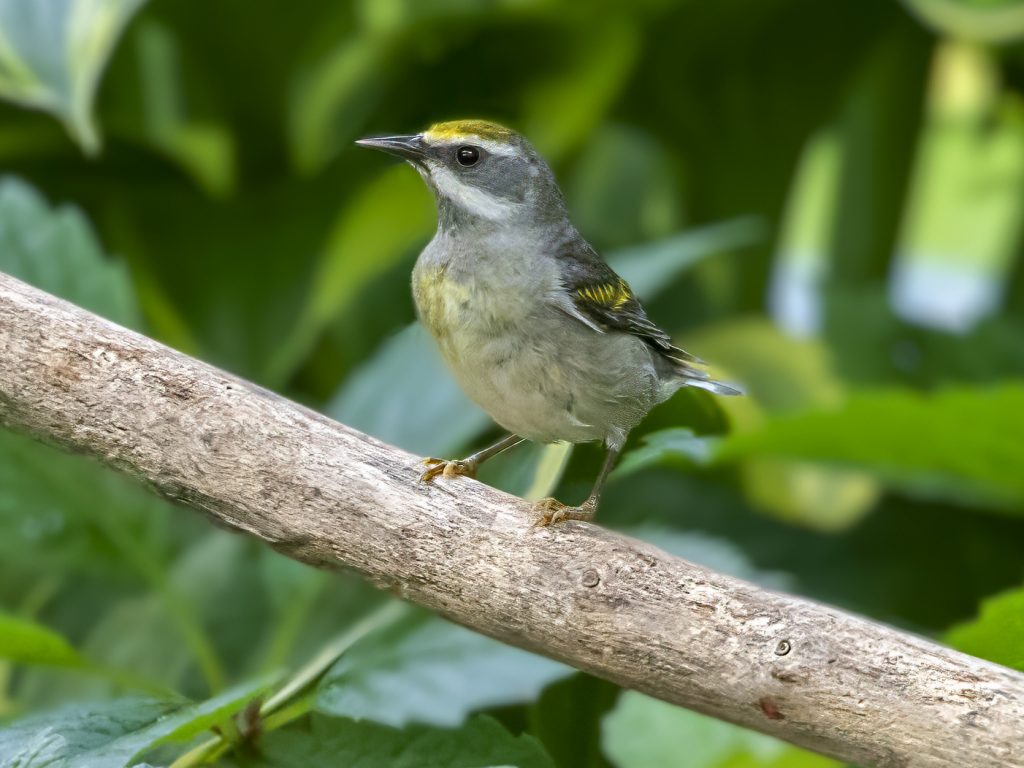
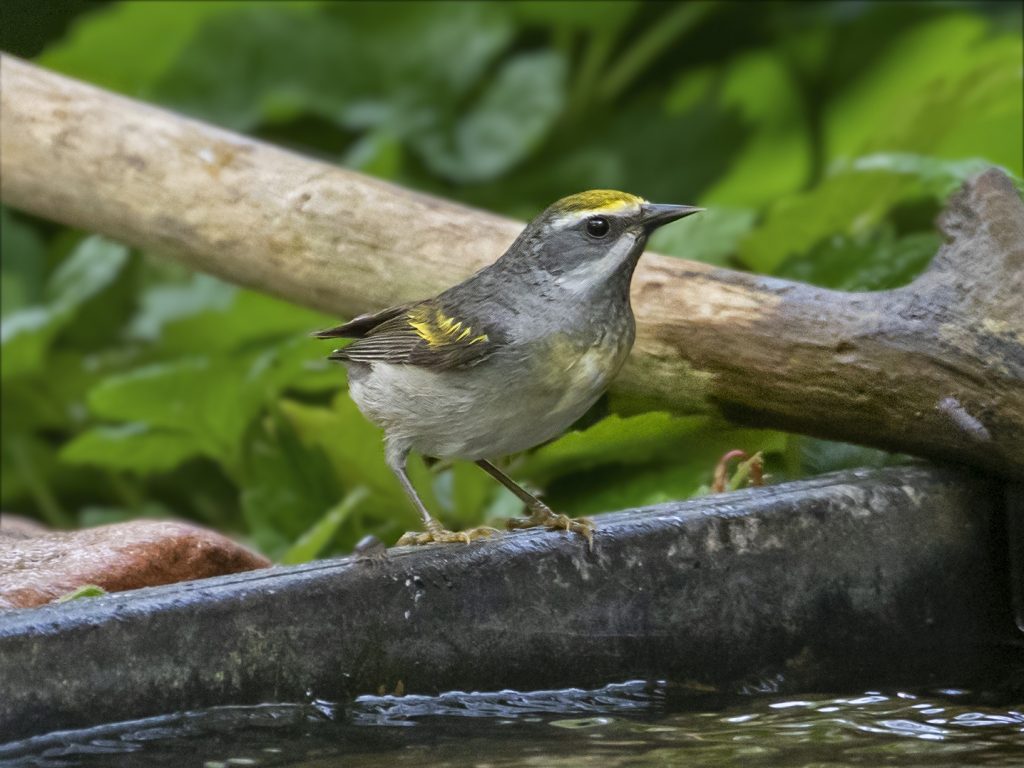
Acknowledgements: Photographs (top two; Mark Brogie; middle two Phil Swanson; bottom two Phil Swanson) of apparent F2 backcrosses between Brewster’s Warbler and Blue-winged or Golden-winged Warbler (See Comments).
Literature Cited:
Baiz, M.D., G.R Kramer, H. Streby, S.A Taylor, I.J. Lovette, and D.P.L Toews. 2020. Genomic and plumage variation in Vermivora hybrids. Auk 137, Issue 3. ukaa027, https://doi.org/10.1093/auk/ukaa027.
Confer, J.L., P. Hartman, and A. Roth. 2020. Golden-winged Warbler (Vermivora chrysoptera), version 1.0. In Birds of the World (A. F. Poole, Editor). Cornell Lab of Ornithology, Ithaca, NY, USA. https://doi.org/10.2173/bow.gowwar.01.
Grove, D.S. 2019. The Identification of the Burket Triple Hybrid- a Brewster’s/Chestnut-sided Warbler. Pennsylvania Birds 33: 223-225.
Nichols, J.T. 1908. Lawrence’s and Brewster’s Warblers and Mendelian inheritance. Auk 25: 86.
Parkes, K.C. 1951. The genetics of the Golden-winged X Blue-winged Warbler complex. Wilson Bulletin 63: 5-15.
Toews, D.P.L., S.A. Taylor, R. Vallender, A. Brelsford, B.G. Butcher, P.W. Messer, and I.J. Lovette. 2016. Plumage Genes and Little Else Distinguish the Genomes of Hybridizing Warblers. Current Biology 26: 2313-2318.
Recommended Citation
Silcock, W.R., and J.G. Jorgensen. 2026. Golden-winged x Blue-winged Warbler (hybrid) (Vermivora chrysoptera x cyanoptera). In Birds of Nebraska — Online. www.BirdsofNebraska.org
Updated 27 Apr 2026