Troglodytes pacificus
Status: Rare casual fall visitor west.
Taxonomy: Recent genetic studies (Drovetski et al 2004, Toews and Irwin 2008) have resulted in splitting of former holarctic Winter Wren T. troglodytes into three species, two of which breed in North America (Chesser et al 2010). The newly-elevated species are Pacific Wren T. pacificus, Winter Wren T. hiemalis, and Eurasian Wren T. troglodytes.
Fourteen subspecies of Pacific Wren T. pacificus have been recognized (AviList 2025), 10 of which occur only in Alaska; the remaining four are muiri and obscurior of Oregon south to central California, pacificus of southeastern Alaska south to California and east to southeastern Idaho and northwestern Wyoming, and salebrosus from British Columbia, east of coast ranges, to southwestern Alberta, northern Idaho, and western Montana, wintering south to Arizona and southern California. These four subspecies were synonymized as T. p. pacificus (Pyle 2025, Toews et al 2025).
Disjunct breeding of “Winter Wren” was confirmed in Lawrence Co, South Dakota in the Black Hills 30 Jun 2007 (Martin 2008), prior to the species’ split. Even though the original Black Hills site in Ward Draw, Lawrence Co is no longer occupied due to habitat change, a few have “popped over the hill” to Keough Draw, where 2-3 were singing 7 Jul 2018 (Nancy Drilling, post to SD-birds 7 Jul 2018) and there have been subsequent summer sightings (eBird.org, accessed Jul 2026). Although there are several eBird checklists claiming Pacific Wren, Toews et al (2025) noted that purported identity as T. pacificus “needs confirmation”. That more study of the Black Hills population is needed was suggested by an equivocal recording by Nate Peterson in Lawrence Co, SD 19 Jun 2024 that “sounded more like a Winter Wren than a Pacific Wren” (eBird.org). Justin Rink (2018) recorded a song 18 Mar 2018 near Chadron SP, Dawes Co, Nebraska that sounded “almost halfway between [Winter Wren] and [Pacific Wren]”. There have been reported F1 hybrids between the two species in British Columbia, although these may merely represent ancient introgression (Toews et al 2025). There have been no genetic studies of the Black Hills “Winter Wrens”; perhaps “ancient introgression” applies here as well.
The subspecies of putative breeding Pacific Wrens in the South Dakota Black Hills and vagrants to Nebraska is uncertain, although a Pacific Wren in Nebraska 15 Sep 2023 had features consistent with salebrosus (Mlodinow, eBird.org).
Taxonomy of the birds recorded as breeding in northwest Wyoming is unclear, but “most likely belong to the Western Coast Pacific group” (Faulkner 2010), presumably T. p. pacificus; Phillips (1986) considered specimens taken in northwest Wyoming indeterminate.
Fall: There are five records:
15 Sep 2023 Oliver Reservoir, Kimball Co (photos, Mlodinow; Brogie 2024)
14 Sep 2017 photo, measured, banded Chadron SP, Dawes Co (Brogie 2018)
30 Sep 2025 Oliver Reservoir, Kimball Co (Brenner; Brogie 2026)
12-13 Oct 2023 Gering Cemetery, Scotts Bluff Co (recording, photos, Brenner, DaRugna; Brogie 2024)
24 Dec 2017 photo, recording Chadron Creek WMA, Dawes Co (Brogie 2018).
The first record for the state was of one banded, measured, and photographed by Bird Conservancy of the Rockies bander Aaron Hulsey at Chadron SP, Dawes Co 14 Sep 2017; no recordings were made, however (Hulsey 2017, Brogie 2018). Another was photographed and recorded at Chadron Creek WMA, Dawes Co 24 Dec 2017 (Manning 2017, Brogie 2018). The third was of one that responded strongly to a tape recording and was photographed; it had features of subspecies salebrosus (Mlodinow, eBird.org). The fourth record was of one recorded and photographed at Gering Cemetery 12-13 Oct 2023 (Brenner, DaRugna; eBird.org). Fifth was photographed and recorded at Oliver Reservoir, Kimball Co by Stephen Brenner.
Additional Nebraska reports suggestive of Pacific Wren, but without audio evidence, are of one at Ash Hollow SHP, Garden Co 19 Feb 2000 and another in Monroe Canyon, Sioux Co 21 Jan 2001 that were identified by call notes as Pacific Wrens (Stephen J. Dinsmore, personal communication). It should be noted that small, dark-plumaged, short-tailed wrens in western Nebraska are most likely Winter Wrens unless calls are heard; one in Dundy Co 14 Mar 2015 and another 9 Sep 2014 Dawes Co were determined by vocalizations to be Winter Wrens.
The occurrence of this species as a migrant in western Nebraska would not be unexpected based on its putative occurrence in summer in the Black Hills of South Dakota (Drilling et al 2018, eBird.org, accessed Jul 2026) and the low numbers breeding in the eastern Colorado and Montana Rockies (Toews et al 2025).
Comments: There are about 15 records on the Great Plains east of the Rocky Mountains Front Range and not including the Black Hills in South Dakota: three in South Dakota Nov-Apr, four in Nebraska Sep-Dec, two in Kansas Nov-Dec, one in Iowa Oct, and five in Colorado Sep-Jan (eBird.org, accessed Jul 2026).
Identification by plumage and vocalizations was quantified by Freeland et al (2026) and Monk and Freeland (2026).
Images
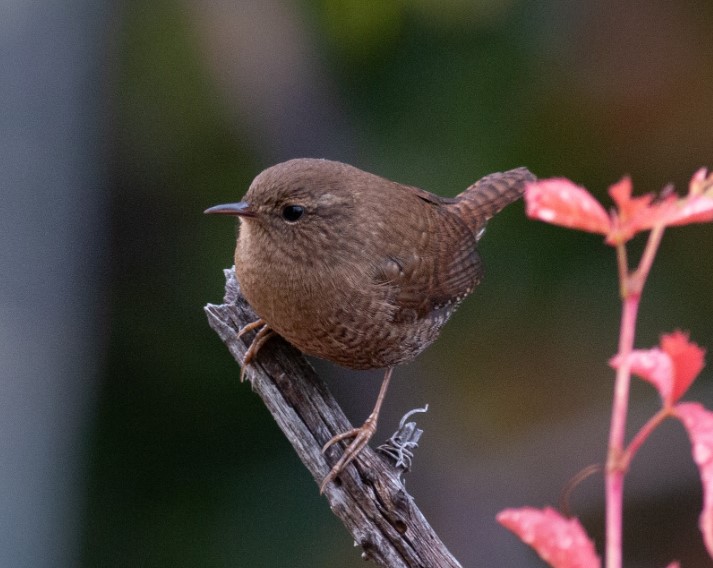
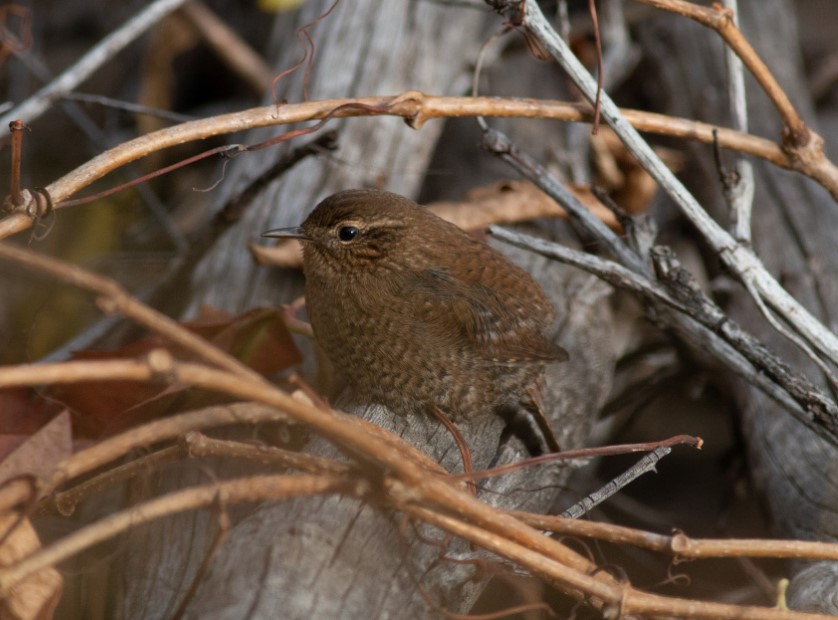
Abbreviations
SHP: State Historical Park
SP: State Park
WMA: Wildlife Management Area (State)
Literature Cited
AviList Core Team, 2025. AviList: The Global Avian Checklist, v2025. https://doi.org/10.2173/avilist.v2025.
Brogie, M.A. 2018. 2017 (29th) Report of the NOU Records Committee. NBR 86: 131-142.
Brogie, M.A. 2024. 2023 (35th) Report of the NOU Records Committee. NBR 92: 132-138.
Brogie, M.A. 2026. 2025 (37th) Report of the NOU Records Committee. NBR 94: 69-75.
Chesser, R.T., R.C. Banks, F.K. Barker, C. Cicero, J.L. Dunn, A.W. Kratter, I.J. Lovette, P.C. Rasmussen, J. V. Remsen, Jr., J.D. Rising, D.F. Stotz, and K. Winker. 2010. Fifty-first Supplement to the American Ornithologists’ Union Check-list of North American Birds. Auk 127: 726-744.
Drilling, N.E., E.D Stukel, R.A. Sparks, and B.J. Woiderski. 2018. The Second Atlas of Breeding Birds of South Dakota. SDGFP, Wildlife Division Report 2017-02. South Dakota Game, Fish, and Parks, Pierre.
Drovetski, S.V., R.M. Zink, S. Rohwer, I.V. Fadeev, E.V. Nesterov, I. Karagodin, E.A. Koblik, and Y.A. Red’kin. 2004. Complex biogeographic history of a Holarctic passerine. Proceedings of the Royal Society of London Series B-Biological Sciences 271: 545–551.
Faulkner, D.W. 2010. Birds of Wyoming. Roberts and Company, Greenwood Village, Colorado, USA.
Freeland, M., E. Monk, and P. Pyle. 2026. An analysis of plumage characteristics of the Winter and Pacific Wrens. Western Birds 57: 86-103. https://journal.westernfieldornithologists.org/index.php/westernbirds/article/download/2010/1889.
Hulsey, A. 2017. Checklist S39184100: Chadron SP, Dawes County, Nebraska, US. eBird.org, accessed 8 Jun 2018.
Manning, S. 2017. Checklist S41333301: Chadron Creek Ranch WMA, Dawes County, Nebraska, US. eBird.org, accessed 8 Jun 2018.
Martin, R. 2008. Northern Great Plains. North American Birds 61: 605-606.
Monk, E. and M. Freeland. 2026. Variability in Common Call Notes of the Winter and Pacific Wrens. Western Birds 57:104–122. https://www.journal.westernfieldornithologists.org/index.php/westernbirds/article/download/2011/1890.
Phillips, A.R. 1986. The known birds of North and Middle America. Part 1. Published by the author, Denver, Colorado, USA.
Pyle, P. 2025. A Practical Subspecies Taxonomy for North American Birds. North American Birds 76(1).
Rink, J. 2018. Checklist S43756890: 200 Camp Norwesca Road, Chadron, Dawes County, Nebraska, US. eBird.org, accessed 10 Jul 2018.
Toews, D.P.L., and D.E. Irwin. 2008. Cryptic speciation in a Holarctic passerine revealed by genetic and bioacoustic analyses. Molecular Ecology 17: 2691-2705.
Toews, D.P.L., D.E. Irwin, M.B.H. Freeland, and E.G. Monk. 2025. Pacific Wren (Troglodytes pacificus), version 1.1. In Birds of the World (S. M. Billerman, Editor). Cornell Lab of Ornithology, Ithaca, NY, USA. https://doi.org/10.2173/bow.pacwre1.01.1.
Recommended Citation
Silcock, W.R., and J.G. Jorgensen. 2026. Pacific Wren (Troglodytes pacificus). In Birds of Nebraska — Online. www.BirdsofNebraska.org
Birds of Nebraska – Online
Updated 28 Aug 2026